Body, Mind & Spirit
Published: January 20, 2026
Physical Health
There is little difference between Bharatanatyam and Yoga. I believe Bharatanatyam is yoga in motion. Yogic postures and the stances are woven into adavus, while the mudras function as a means of communicating. The eye, head and neck movements known as the Drishti, Shiro and Greeva bhedas, are focussed exercises for smaller muscles in the body, often neglected. Facial expressions or abhinaya not only convey a story to an audience but also incorporates the exercise of facial muscles. These exercises are relevant today, when much of our time is spent sitting and engaged with screen. The subtle movements of eyes, head, and neck help release the daily stiffness and strain of a sedentary life.
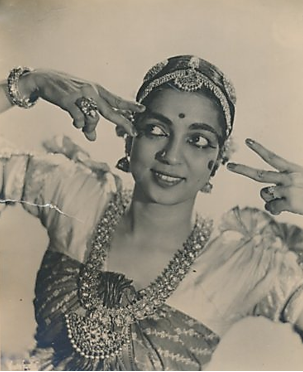
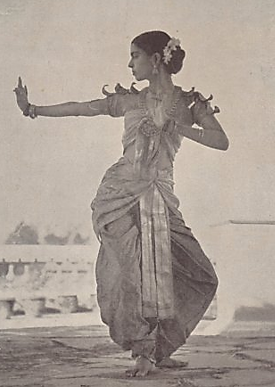
Guru Rukmini Devi Arundale | Source: Archives of VP Dhananjayan
Infact, I have encountered several individuals who have experienced relief from health issues through sustained practice of this dance form. For instance, a friend who developed strabismus (squint) as a child, was advised by doctors to learn Bharatanatyam classes. Over time, the regular practice strengthened her eye muscles without long term dependence on medication or eye glasses.
On a personal note, Bharatanatyam has been helpful in controlling my muscle cramps. It is a holistic exercise which involves cardio, flexibility, strength training, and balancing. Beyond physical benefits, it heightens spatial awareness, control our body, mind and breath, trains us to focus on our thoughts, emotions and actions.
Mental Health
Numerous scientific studies that have demonstrated the physical, mental and psychological health benefits of dancing. While these findings provide valuable validation, my understanding comes from a lived experience as a practitioner of the art form.
Bharatanatyam has as much to do with our mind as it is to do with our bodies. We own our bodies and the space around it. Moving in tandem with the music we learn how to focus on the beats and the melody. We unite the beats of the mridangam, the sound of the cymbals (nattuvangam), the chollu or syllables and the harmony of the vocals, flute, violin and veena.
The shloka from Abhinayadarpanam emphasises this:
Yatho hastha thatho dristhi
Yatho drishti thatho manaha
Yatho manaha thatho bhavah
Yatho bhavasthatho rasaha
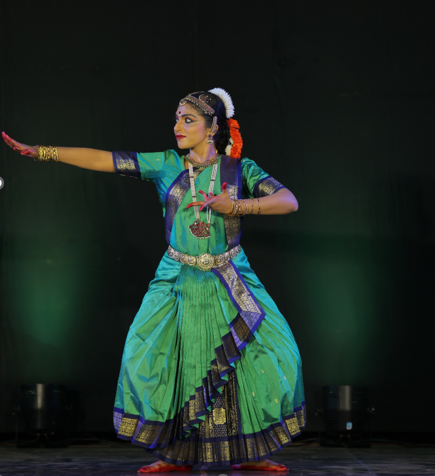
Photo Credit: Sreenath Narayanan
When our heart and mind work together to guide our muscles in a desired way in rhythm to the music, while remaining spatially and temporally aware, we establish a balance and stability in our thoughts and actions. This complete immersion in moment cultivates deep focus, similar to being in a meditative state. When our minds wander in various directions, we reclaim the power through rhythmic self-expression, liberating and releasing ourselves from bondage. This is the essence of Shiva as the Nataraja.