Shiva as Nataraja
Published: January 25, 2026
The dancing form of the Shiva is the Nataraja according to Hindu mythology is deeply embedded with symbolic meaning. Each element in the visual aspect of the Nataraja figure conveys philosophical ideas. Shiva's four hands, cresent moon, ganga emerging from the matted locks and the serpent intertwined around his neck, and the circular frame known as the Prabhavali or Prabhamandalam, circle of light indicates cosmic unity, balance, stillness amidst chaos.
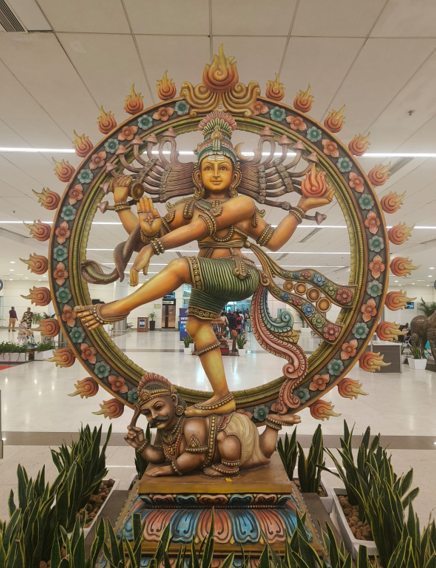
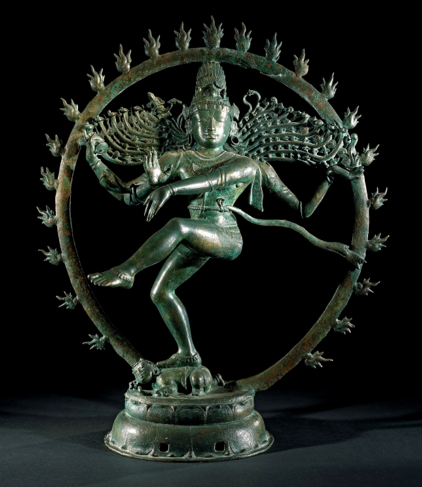
Nataraja Statue at the Chennai Airport | Nataraja Bronze Statue (circa 1100) - Source: The Trustees of the British Museum
The Symbolism of Hands
The right hand holds the damaru, a percussion instrument. It symbolises origins of sound, music, language. The reverberation of the instrument reminds us to focus our mind to the sound. It informs us to be aware of ourselves and the world around us. The other right hand is the abhaya hastha where Shiva protects and guards us from evil.
The upper left hand holds the fire or agni. It is a source of light, that propels us to pursue knowledge and seek the truth. And at the same time, fire is destructive and possess the power to engulf and erase the malicious. Where there is creation, there is destruction and what is evil must be destroyed. The lower left hand in the dola hastha extended and aligned with the raised leg directs us towards detachment, independence, and liberty and freedom from all bondages.
Overcoming Ignorance
Beneath Shiva's right foot is Muyalaka or Apasmara, a demon. Suppressed under the force of Shiva's feet it reminds us that one must win over the avarice, pride, and ignorance.
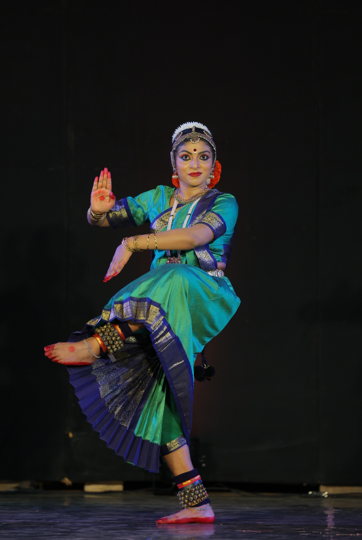
Photo Credit: Sreenath Narayanan
The Essence of Dance
In its essence, nritya or dance, as represented through the figure of the Nataraja is an effort to achieve inner peace, awareness and freedom.